Mouse in a condo wall
A new-construction condo owner notices a sharp smell along a kitchen wall a week after hearing scratching behind it.
Walls · Attics · Crawlspaces · Vents
When a mouse, bird, or larger animal dies somewhere you can't see, the smell can take over a room within days. Here's how to find it and deal with the odor it leaves behind.
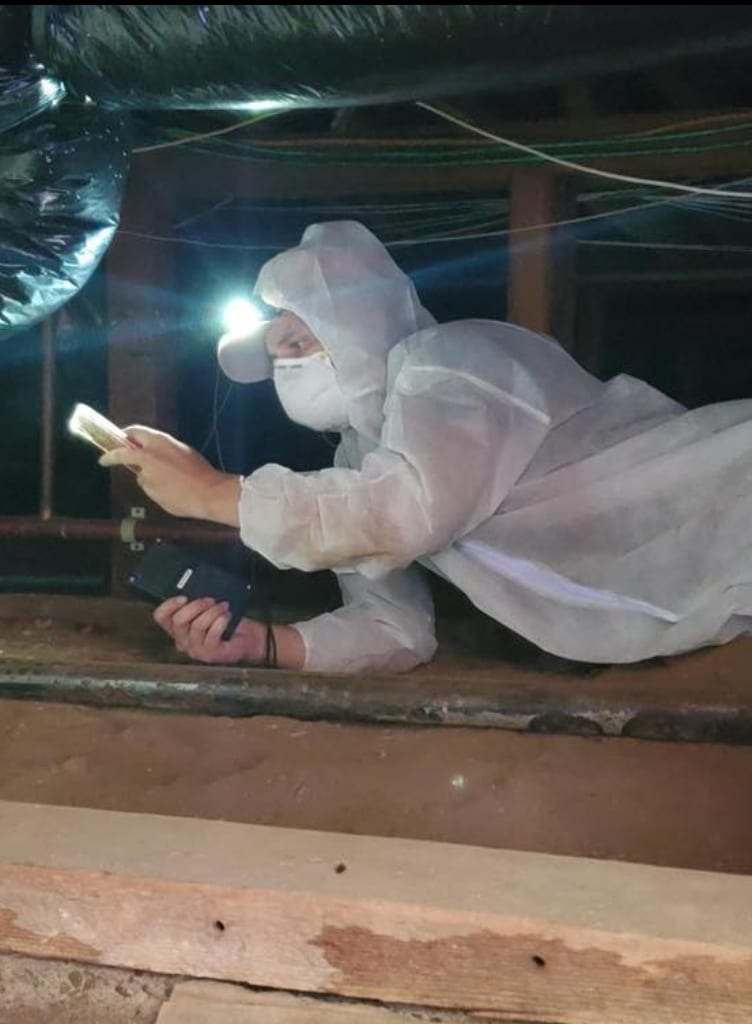
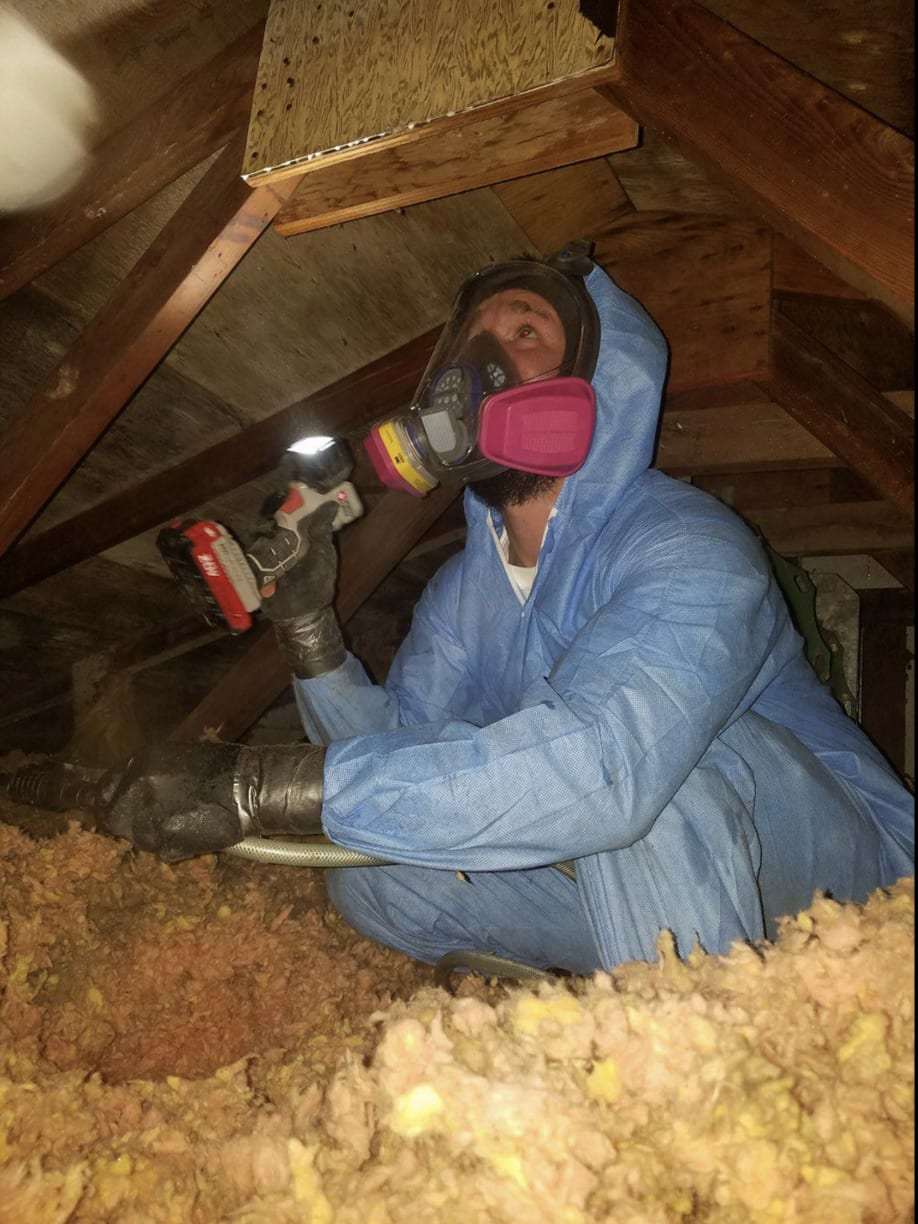
As an animal decomposes, it releases sulfur and nitrogen compounds that are noticeable at tiny concentrations. A single mouse inside a wall cavity can make a bedroom smell for a week or more; a larger animal in an attic or crawlspace can affect the entire house. The odor usually peaks a few days after death and then fades slowly, but fluids and residue left behind can keep smelling long after.
Treatment has two parts: locating and removing the source, and neutralizing what soaked into insulation, drywall, subfloor, or soil. A typical odor job narrows down where the smell is coming from, treats the affected materials with bio-enzymatic products, and treats the room's air when the odor has spread.
Decomposition odor is best treated once the animal is out; ask whether enzymes or fragrance will be used, since fragrance only covers it.
1
Note exactly where the smell is strongest, and whether it changes with the time of day or the heat.
2
Don't cut into walls or ceilings yet; locating the source first keeps openings small.
3
Keep children away from any carcass you find and wear gloves if you have to bag it.
4
If animals are still getting in, line up a pest or wildlife professional to seal the entry points.
Before anyone opens a wall, a little detective work saves a lot of drywall. These clues help pinpoint the spot:
Smell the base of walls and at ceiling level in the strongest room. Odor is usually most intense near the source, then spreads through cavities.
Flies gathering at a window, light fixture or outlet in one room often point to the source nearby.
A damp or discolored patch on drywall or a ceiling can show where remains are resting.
Attic vents, gaps around pipes, crawl space openings and chimneys are where animals get in.
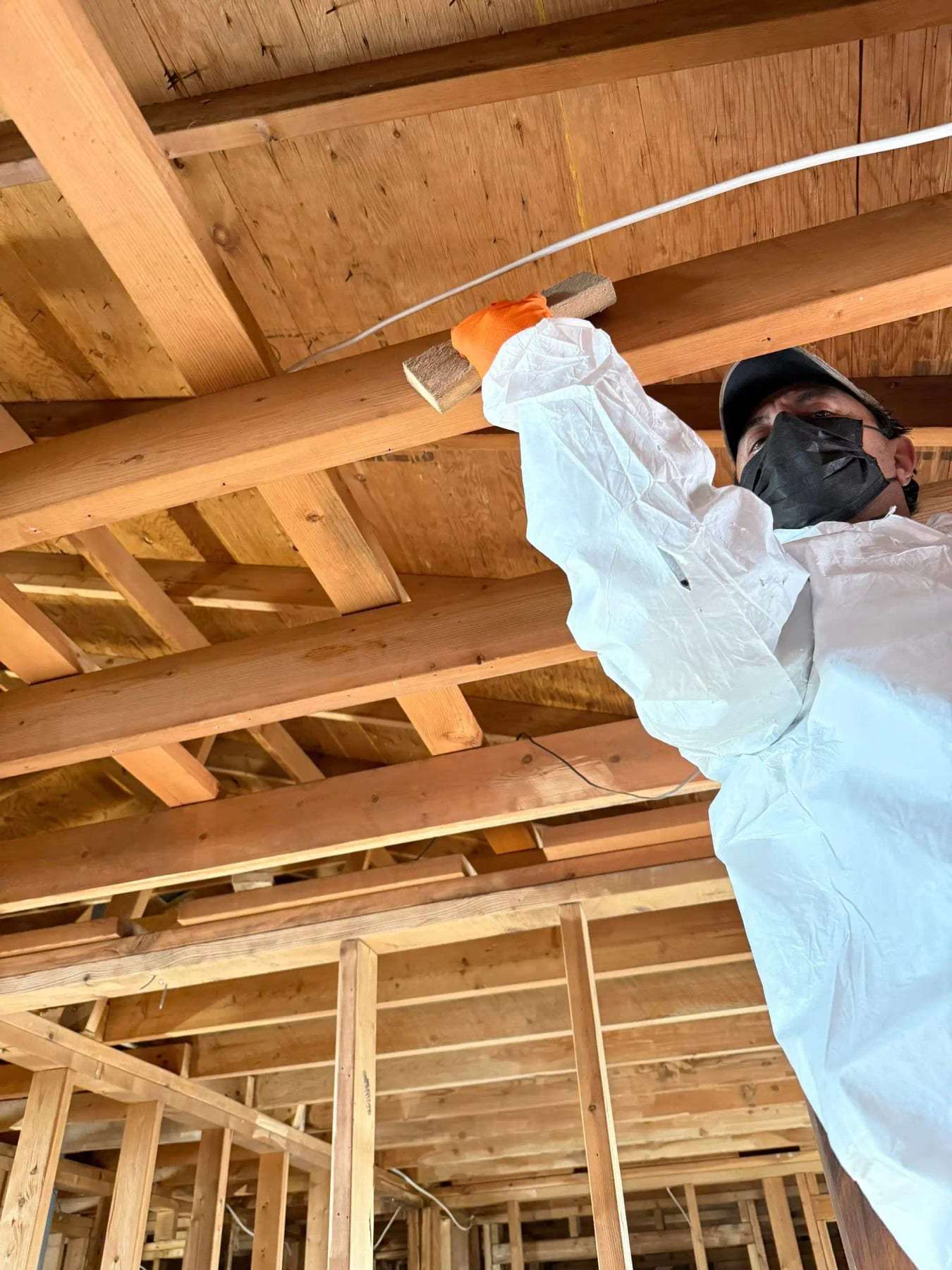
Finding the source accurately keeps repairs small and makes the treatment last.
| # | Step | What happens |
|---|---|---|
| 1 | Narrow down the location | The odor is traced to a wall section, ceiling area, vent, or crawlspace zone. |
| 2 | Plan access | You should hear whether the source can be reached through an existing opening or needs a small, patchable access cut. |
| 3 | Remove the source | The carcass and nesting material are removed when accessible, sometimes by a wildlife or pest professional. |
| 4 | Treat residue | Bio-enzymatic treatment goes on contaminated insulation, framing, and surfaces. |
| 5 | Clear the air | A whole-space treatment follows if odor spread through the room or air system, then the result is reviewed. |
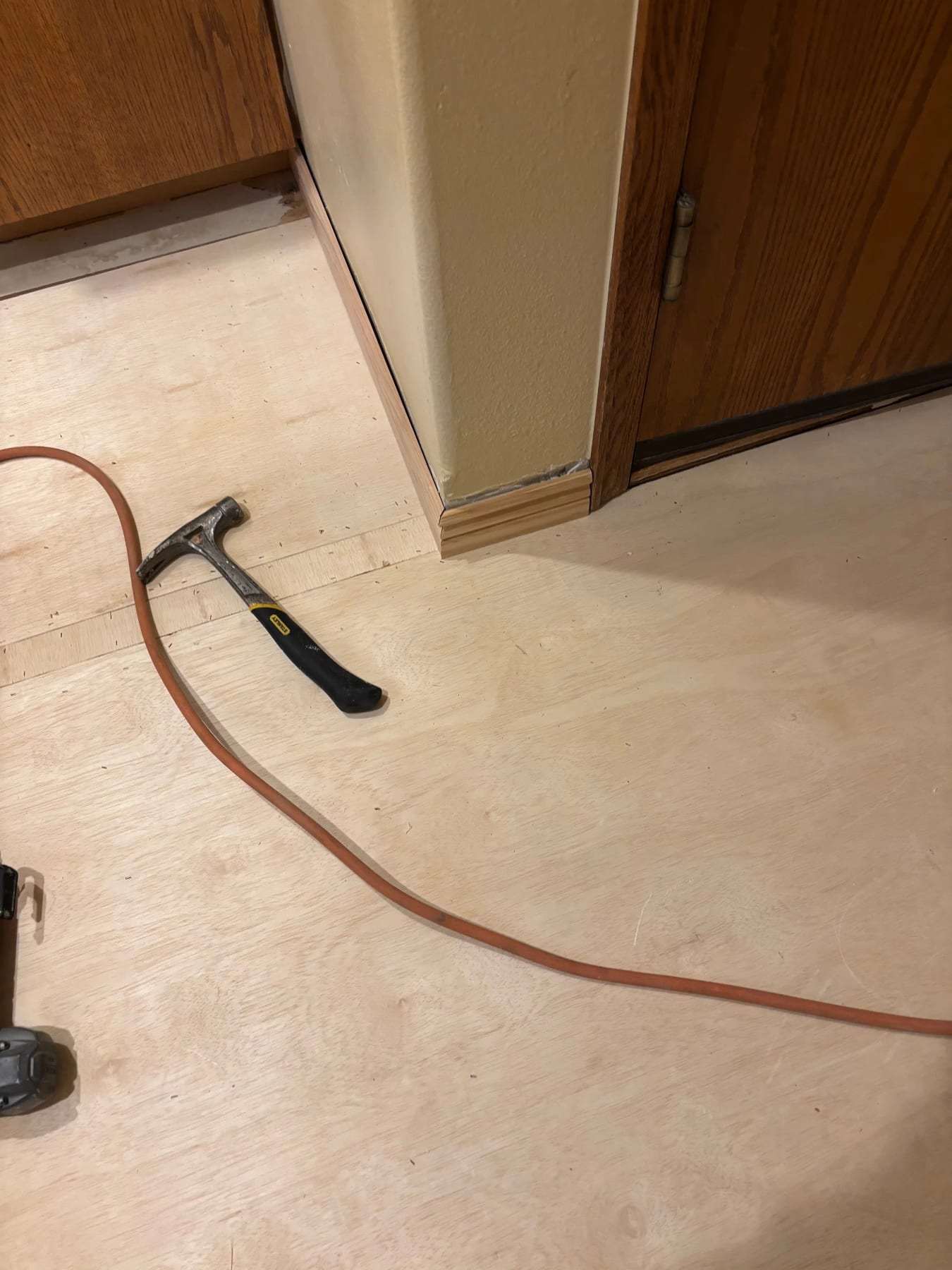
Removing the remains is step one. Fluids and residue soak into insulation, drywall and wood around the spot, and that material keeps smelling. Treating the area where the animal lay, and the surfaces the odor spread through, is what finally ends it.
Some homeowner's policies may cover related damage; your insurer decides. Photos of the location and any damage help either way.
Sloan's Lake Park, one of the largest lakes in Denver, draws birds, squirrels, raccoons, and the occasional skunk, and the neighborhoods around it mix older single-family homes with new condominium and townhome buildings. Older houses often have crawlspaces, attic vents, and gaps where animals get in; newer buildings can have animals trapped in wall cavities or vent runs during and after construction.
In a condo or townhome, the odor can also travel between units through shared walls and ceilings, so it's worth telling your HOA or building manager if the smell seems to come from outside your unit.
ZIP codes served: 80212 (Denver), 80211 (Denver), 80204 (Denver), 80214 (Denver).
Also nearby: 80202, 80203, 80033, 80219, 80218, 80226, 80205, 80215, 80223, 80002, 80221, 80216, 80206.
A new-construction condo owner notices a sharp smell along a kitchen wall a week after hearing scratching behind it.
A bird gets trapped in an exhaust duct, and the bathroom smells every time the fan runs.
An animal that sheltered in the crawlspace of a 1940s home dies there, and the smell rises through the floor into the living room.
Walk-throughs and tools for tracking the smell down and deciding what comes after removal.
It depends on the animal's size, temperature, and humidity. A small rodent may smell for one to three weeks; larger animals can take much longer, and residue can keep smelling after the carcass dries out.
Not always. Sometimes the source can be reached through an attic, crawlspace, vent, or outlet box. When an opening is needed, the goal is a small cut that can be patched.
Flies are drawn to decomposition and can breed on the carcass. A sudden cluster of flies near a window often points to the room or wall where the source is.
If the animal is in or near ductwork, a return, or a crawlspace connected to the air system, the odor can circulate through the house. That's when a whole-space treatment helps.
If it's accessible, wear gloves and a mask, bag it securely, and disinfect the area. Avoid touching it directly; dead animals can carry parasites and bacteria.
Usually not on its own. If the animal caused other damage, such as chewed wiring or a leak, ask your agent whether any part of the repair is covered.
Removal is usually done by a pest or wildlife control company or a handyman who can open a small access hole and repair it after. An odor specialist can help narrow down where the smell is coming from, and treating the odor and residue comes once the remains are out.
This form is not connected. This website is a draft preview: no business has been confirmed to receive requests, so the fields below are switched off and nothing can be sent. In an emergency, call 911.